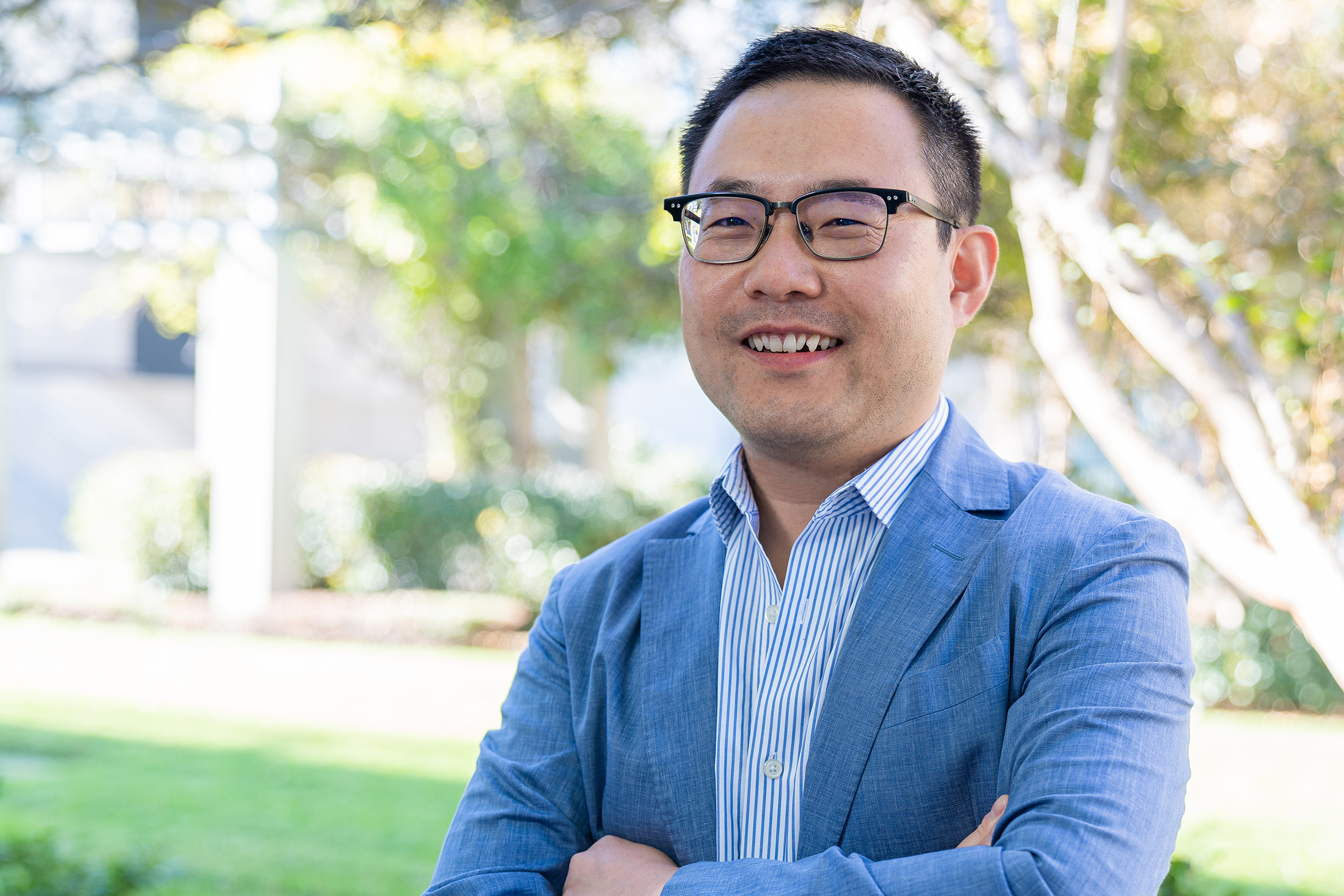
UC Irvine (UCI) faculty researchers have been at the forefront of COVID-19 research since the beginning of the pandemic. Weian Zhao, Ph.D., who has worked with other UCI faculty to create a rapid test to detect SARS-CoV-2, is now working with graduate student Lexi Crowell on developing a solution to prevent long COVID and treat acute respiratory distress syndrome (ARDS).
Long COVID, also known as long-haul COVID or chronic COVID, refers to the long-term health effects experienced by individuals who previously contracted COVID-19. According to the Centers for Disease Control, long COVID can last months and includes symptoms such as difficulty breathing or concentrating, joint or muscle pain, and even autoimmune conditions.
In addition to long COVID, many hospitalized COVID-19 patients are diagnosed with ARDS, an incurable lung injury that makes breathing difficult and prevents oxygen from entering the body.
“When people die from COVID-19, they are dying from ARDS,” said Zhao. “That is a process when the virus infects people and the immune system in the lungs reacts and tries to clear the infection. But what happens is the immune system gets overly reactive and creates inflammation to trigger other immune cells to come help. This pro-inflammatory state in the lung is what is killing patients.”
The recovery period for ARDS is long, with some patients only able to regain partial lung function, and according to Zhao, there are other serious complications that can arise from the severe lung damage.
“Say a person survives and leaves the ICU after having been diagnosed with ARDS. Their lungs have been damaged and that pro-inflammatory state can induce a downstream fibrosis process that leaves the lungs severely scarred, making it even more difficult to breath for many months,” said Zhao.
The proposed therapy was informed by Zhao’s own research paper on stem cells, which was recently published in Nature Biomedical Engineering, and involves administering engineered stems cells intravenously to exploit the body’s immune response. According to Zhao and the fundraising campaign for this project, the therapy could save lives and improve the quality of life for those recovering from COVID-19 and ARDS.
“There are other drugs such as steroids, which are given to patients with ARDS,” said Zhao. “But the efficacy is very small and they have side effects … There are very limited treatments for ARDS, so that’s the first indication we want to treat.”
Zhao and Crowell hope to have pre-clinical results in the coming months. Should the therapy prove effective in animal models, Zhao is confident that in addition to preventing long COVID and treating ARDS, this technique could be augmented to treat all manner of diseases, including cancer.
Funds for this project will cover costs for materials, student researchers and fast-tracking of this therapy to clinical trials.
Learn more about and support this UCI research project.
Main Photo: Julie Kennedy