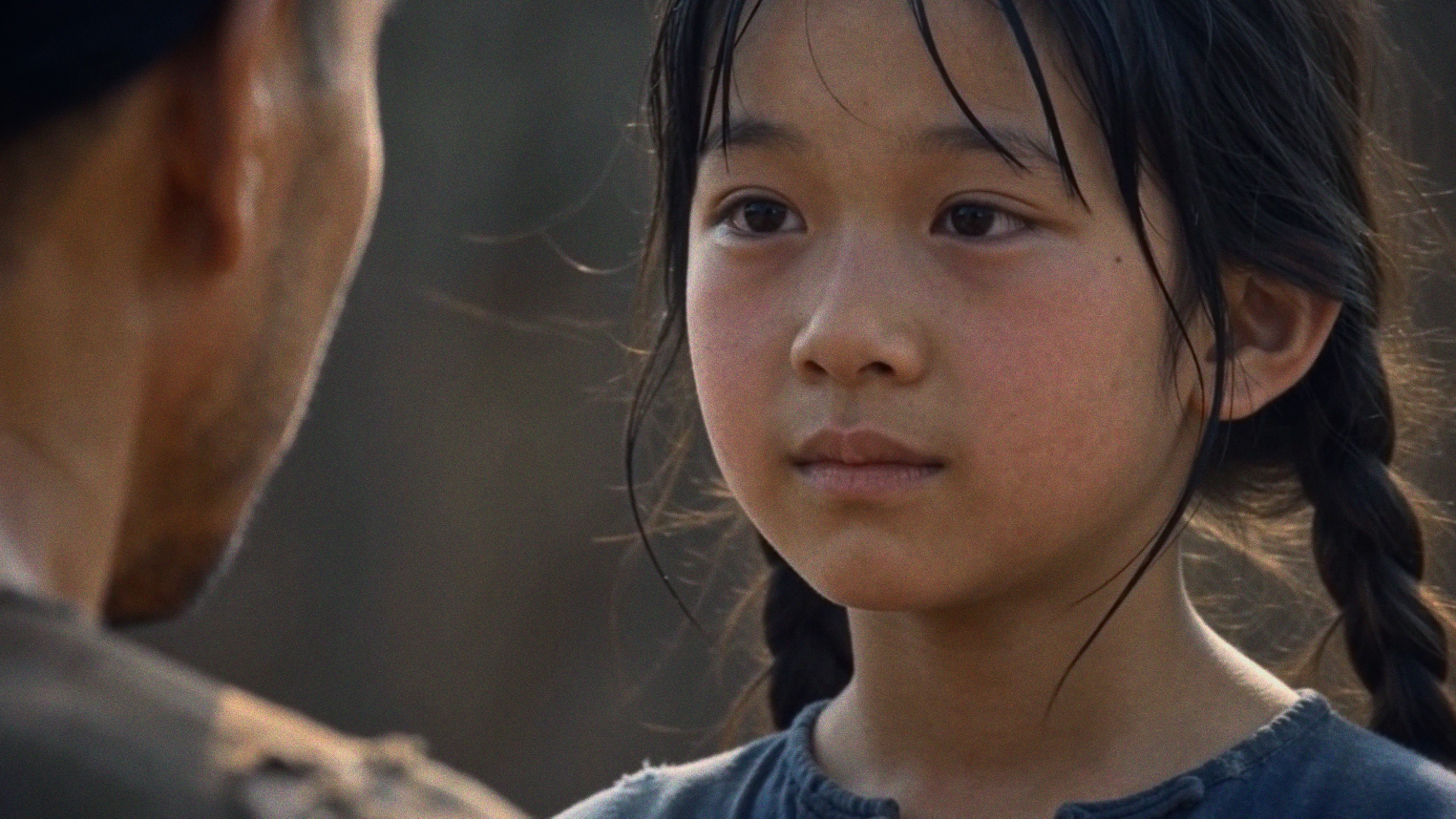


In making an AI-generated film, UC Irvine Beall Applied Innovation discovers that human taste and judgment remain the scarce resource.
When Matt Handy was in film school, Steven Spielberg came to talk to his cohort about filmmaking. When the famous director opened the room to questions, someone raised their hand and asked what the hardest thing about filmmaking was.
“Getting what you want is easy,” Spielberg said. “Knowing what you want is hard.”
Granted, getting what you want is probably easier when you’re Steven Spielberg. But Handy believes Spielberg was getting at something more fundamental. The most important part of filmmaking is having a clear vision, then knowing which creative choices will bring that vision to life.
“AI is kind of like it,” said Handy. “You have to be confident in what it is you want to say. Otherwise, AI will take over your movie.”
This year, Handy got a firsthand look at AI filmmaking while producing Gum Shan, an AI-generated film directed by Max Acchione, an independent filmmaker brought on by UC Irvine Beall Applied Innovation for the research project.
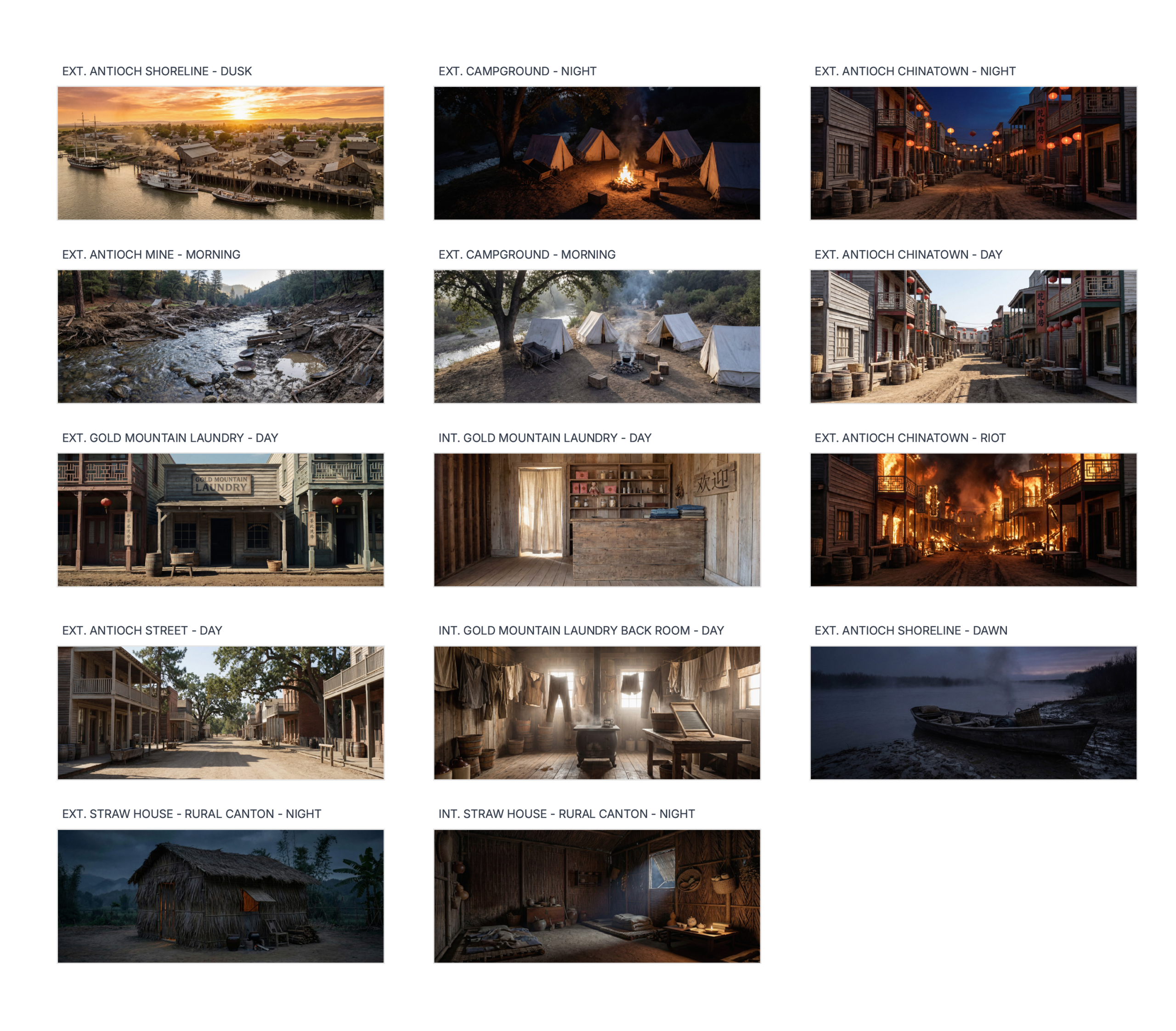
Gum Shan, or “gold mountain,” tells the story of a father who arrives in Antioch, California in 1875 hoping to strike gold to save his ailing daughter back home in China. Bringing that story to the screen also gave the team a chance to test a common assumption about generative AI: type in a prompt and out comes a movie. There is just enough truth to that myth to make it convincing. A prompt can produce a video of a dancing cat or a spaceship landing in Times Square in seconds.
But the team wasn’t trying to just demonstrate the technology. What they wanted to do was create something enduring and emotionally resonant. Producing that took a lot more than a good prompt.
“There was no question it was not faster,” said Handy.
The human in the loop was involved in shaping every shot. “The shot at shoe-level in one of the opening scenes was a decision by the director,” said Sami Alsabawi, an associate producer on the film. “AI didn’t decide it wanted that shot. The look, feel and pacing of the film are all human.”
The 19-minute film spent 10 weeks in pre-production, 11 weeks in production, five weeks in post-production. “It was grueling,” said Acchione.
Making Gum Shan put Spielberg’s observation to the test. AI expanded what a small team could do, but turning those possibilities into a film required technical problem-solving, constant iteration and creative judgment. Making the film would show the team where AI changed the process and where traditional filmmaking skills still mattered most.
The Film That Couldn’t Be Made
Before Gum Shan became an experiment in AI filmmaking, it was a screenplay that seemed nearly impossible to produce. Cheryl Tsai Perez wrote the script through Open Screenplay and M Film Labs, two organizations focused on elevating underrepresented voices in film and television. Her script was selected from a cohort of six writers to be made into a film. Then came a practical question. How could anyone make it on the budget of a short film?
Short films rarely turn a profit, so most are made on tight budgets. The Gum Shan screenplay called for recreating Antioch in the 1870s, with a river steamboat, a crowded wharf, and the burning of the city’s Chinatown, a scene based on an actual episode in the community’s history. Recreating that world would require sets, locations, extras and visual effects far beyond what would typically be available on a short-film budget.
Faced with that problem, M Film Labs board member Mohannad Malas proposed making the film with AI. “The reality is the technology is here, available, and ubiquitous,” he said. But the idea met strong resistance from the board. Malas ultimately asked to option the script himself and pursue the project independently. The board agreed.
Malas sees AI as a way to lower the barriers to traditional filmmaking, giving more people the opportunity to tell their own stories. “Hollywood has been the gatekeeper for years,” he said. “They decided which films get made, which stories get told, and more importantly, which stories do not get told.”
Malas is also a founding board member of UC Irvine Beall Applied Innovation and funded its NarrA.I.tive story studio, as well as the sponsored agreement for the Gum Shan project. “Mohannad had the brilliant idea of bringing Gum Shan to UC Irvine,” said Handy.
Alsabawi, who is a co-founder and COO of Open Screenplay, also believed in the importance of producing this film. “This is a beautiful, compelling story about our country’s history,” he said. “There is a social utility in getting this made.” Alsabawi also raised a pointed question. “Is it better for a film never to be made than for it to be made with AI?”
The project was also intended to have applications beyond just Gum Shan. The tools and techniques tested during production will be used by marketing and communications staff to assist in visual storytelling about the university’s research and technology. The tested techniques now used in the NarrA.I.tive story studio offer UC Irvine student workers first-hand experience that will prepare them for changing roles as they enter the workforce.
“Storytelling is part of getting research to market,” says Errol Arkilic, chief innovation officer of UC Irvine. “Researchers need investors, licensees and industry partners to understand their work. Video can be a very effective way to do this. But it’s also very expensive. If AI can help bring the cost down, this could be of practical use for BAI and the campus.”
6,000 Generations Later
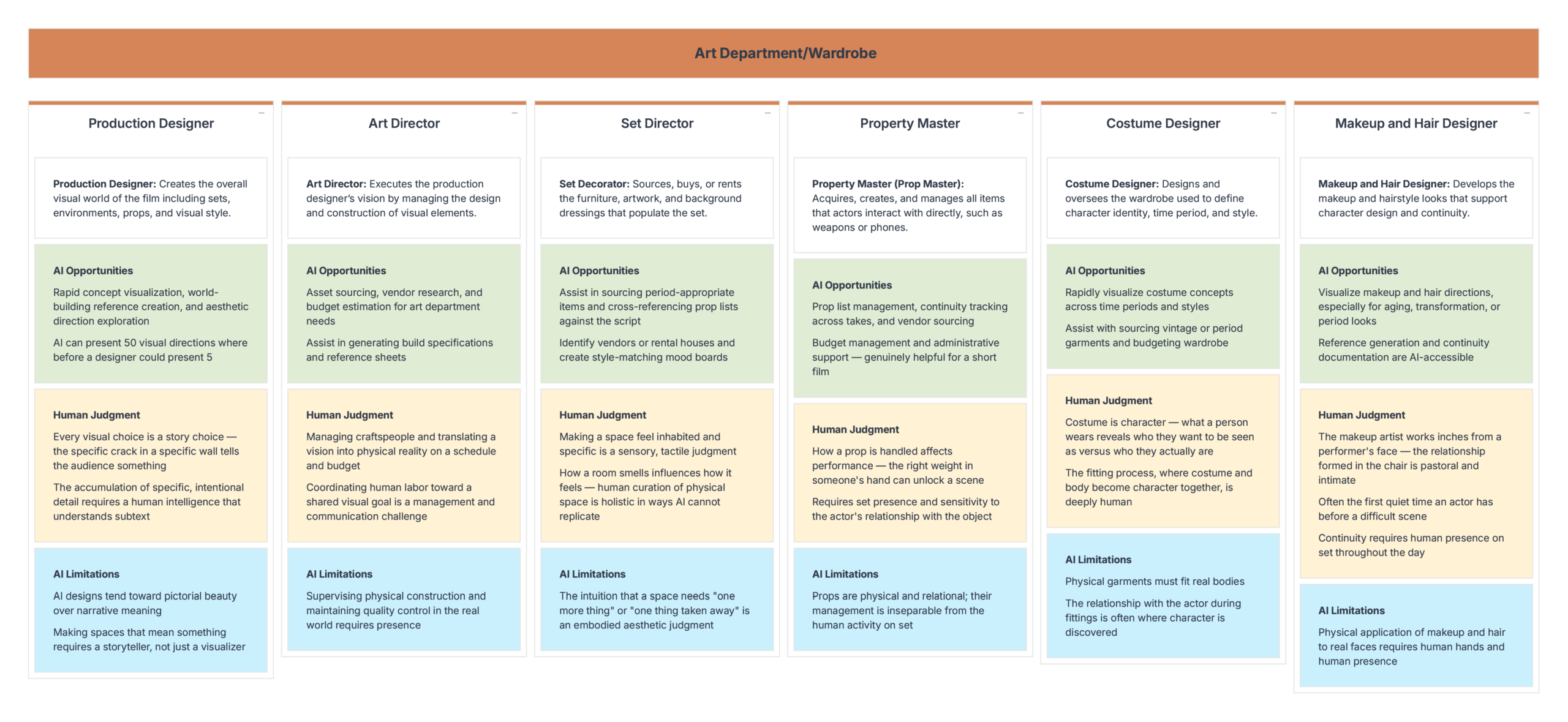
Gum Shan still relied on traditional filmmaking expertise, starting with Acchione’s and Handy’s. After months of intensive production, Acchione also brought on collaborators in London to handle sound and color work. The music, he said, was also created by people rather than generated by AI.
Some domain expertise came from UC Irvine itself. Yong Chen, a professor of history who specializes in Asian American history, served as a historical consultant, helping ground the film’s depiction of 1870s Antioch and its Chinatown in the historical record.
“AI is a tool,”Arkilic said. “It doesn’t have emotions or taste like people do. What interests me is how a filmmaker can use AI to stretch their own creativity.”
What Gum Shan didn’t have was actors. Every character on screen was generated by AI. Alsabawi sees this as a real limit. “Actors are the heart of the industry, and a generated character doesn’t carry the gravitas or star power of a real one,” he said. For him, AI may be most valuable earlier in the filmmaking process, where it can be used to create trailers and pitch materials that convince investors to fund a production with real actors.
For all that AI can make possible, working with it came with a new set of frustrations. The tools could be astonishingly capable one moment and stubbornly unpredictable the next. Making the film, Acchione ran more than 6,000 generations to get the 300 that made the final cut.
Sorting through those generations took a rare mix of skills. Acchione brought an unusual mix of production experience, technical know-how and the ability to improvise when the technology refused to cooperate. When he looked for an AI artist who could help with the work, he discovered how difficult that combination was to find.
Complicating matters, the technology itself was a moving target. New versions of AI models were released while production was underway, forcing the team to decide whether to switch tools “mid-flight” or stick with models they already knew.
“There’s no question it is the wild west right now,” Handy said. “But the lack of stability in the technologies surprised me.” That was the other side of AI’s extraordinary range. Getting 300 usable shots required thousands of attempts, along with the experience to recognize what worked and the persistence to keep trying when it didn’t. “The more I work with AI, the more I realize it’s wider than it is deeper,” he said.
What AI Makes Possible
And yet, for all the unpredictability, the team came away impressed by what the technology could do. For Handy, the biggest surprise was what ended up on the screen.
“I was impressed by the quality,” he said. “I knew it would be good. I didn’t know it would be this good.”
AI also changed the scale the team could work at. A scene that might have practically used 10 extras could just as readily contain 10,000, without the sets, crews and logistics a production of that size would normally require.
Then there was the ability to change the film. Sets could be rebuilt, shots regenerated and endings reconsidered without calling the cast and crew back for a reshoot. Creative decisions that ordinarily would have been finalized much earlier could remain open longer.
“I could go to my software, pull up shot 45, change the prompt, and get a different shot. That’s an enormous time and cost saver,” Acchione said. “I could also try different versions of the ending at very little cost and time. You can’t really do that with traditional filmmaking.” For a small production attempting a film as ambitious as Gum Shan, those capabilities changed what its budget could buy.
AI also helped preserve the ambition of Perez’s original screenplay. The historical settings and action scenes that had once made the script seem impossible to produce could remain. The team could bring that world to the screen without cutting scenes to accommodate the budget.
In the End, the Story
Arkilic said the project set out to answer three specific questions. Could AI stay consistent from one scene to the next? Could it draw out real emotion? And would audiences find it believable? Consistency came back with a clear yes, he said. So did the emotional pull. Believability was the outlier, a mixed response Arkilic expects to keep improving as the tools do.
Acchione personally felt that emotional pull as well, though when he started, his ambitions were much smaller. “I just wanted to see if we could create a believable conversation,” Acchione said. “Instead, we made a film that makes people cry. I didn’t know we could go that far with emotional conveyance.”
Gum Shan was recently named an official selection of the Alexandria Film Festival and won the Grand Jury Prize—Best Film at the 2026 Neu Wave AI Film Festival. Acchione is awaiting decisions from several other festivals. With the film now making its way onto the festival circuit, Acchione has been thinking about what the experience could mean for storytellers working outside the budgets and infrastructure of Hollywood.
“Small teams can now make films on a scale that used to take a studio budget,” he said. “But it’s not like you type in a prompt and a movie comes out. It’s thousands of decisions, and every one of them takes human taste and judgment.”