
There are over 100 different types of cancers, according to the National Cancer Institute, and many affect specific regions or tissues of the body and involve strenuous treatment plans that can have damaging side effects on the body, like the heart, kidneys or lungs, and more. The treatment risks often outweigh the side effects, but several vital signs in the patient’s body often go unchecked between treatments.
Wayfinder startup company NXgenPort seeks to solve this problem and wants to enable early detection of side effects from cancer and treatments like chemotherapy.
The women-led team’s remote monitoring system aims to track declining blood cell counts and abnormal blood flow rates, which can lead to infections and indicate declining heart function.
INSPIRATION BEHIND THE CREATION
Fueled by her father’s battle with multiple myeloma, a type of cancer that affects bone marrow plasma cells, Cathy Skinner, NXgenPort co-founder and CEO, became a cancer exercise specialist in Minnesota where she worked face-to-face with cancer patients helping with their physical activities, wellness coaching and learning more about the cancer journey, including treatments and medication side effects. Skinner was ultimately inspired by one patient who was experiencing medication side effects that were damaging her heart and impacting her blood counts.
“The great news is that she doesn’t have cancer 10 years later [because of the treatment],” said Skinner. “But the bad news is because of the damage that the drug did to her heart, she’s more at risk for cardiovascular disease.”
This situation sparked an idea that led Skinner down a very familiar path. No stranger to the startup life, Skinner dove head first into her idea with passion. Her first startup was a wellness coaching company inspired by her first career as a college volleyball coach. Skinner soon pivoted toward applying those coaching principals to cancer survivors, which led to her second startup, Thrivors, a digital health platform focused on exercise for cancer recovery and oncology nutrition.
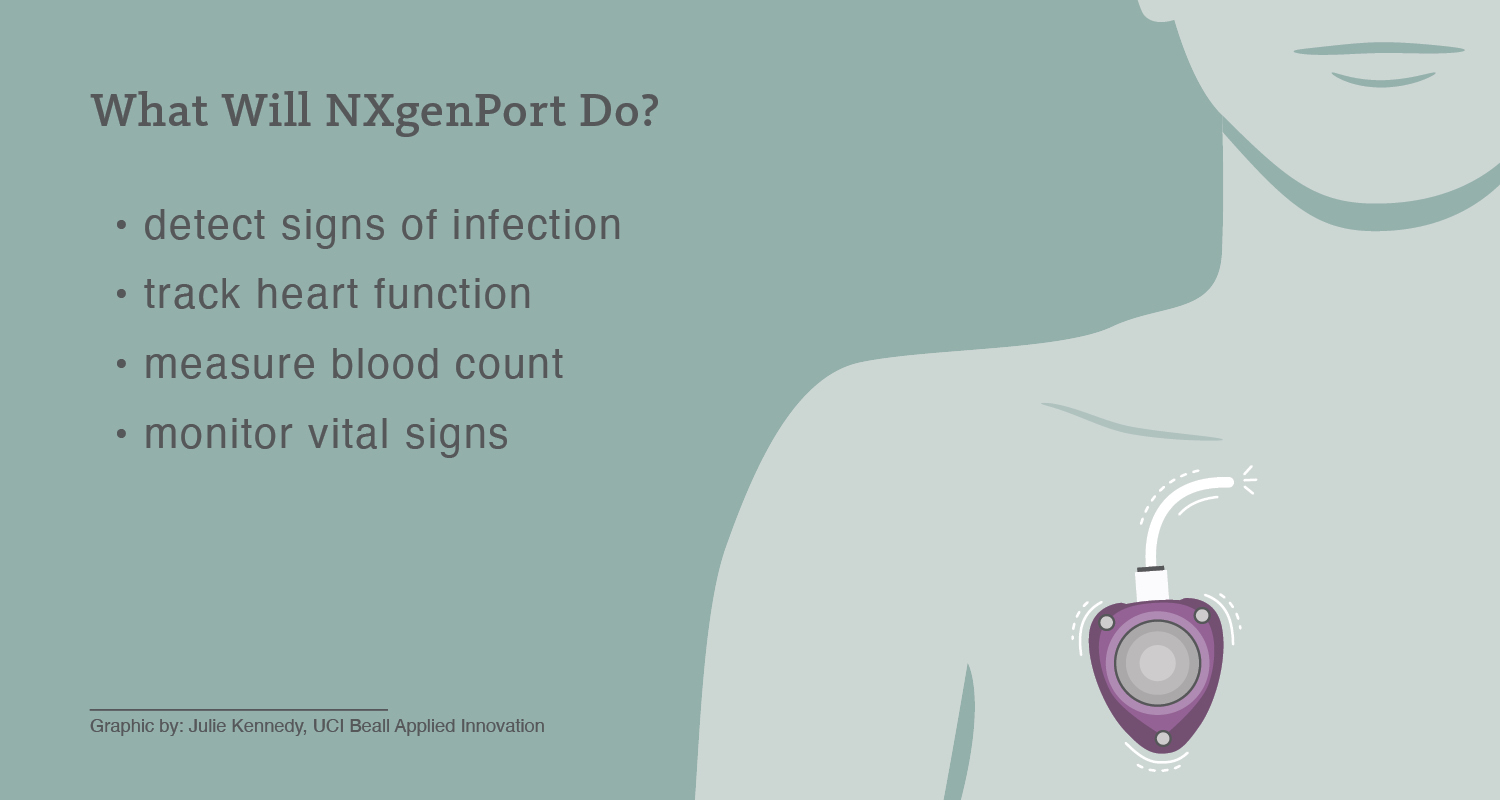
“NXgenPort is the third company that takes an implanted medical device, or a chemo port, and a digital health platform that gathers physiological data and combines them to transform the way patients are monitored remotely,” said Skinner.
Skinner met Rosanne Welcher, MBA, Ph.D., NXgenPort co-founder and chief science officer, at a personalized medicine conference in November 2019 where the two discussed the idea over lunch. Welcher decided to retire from her corporate life as chief scientific officer of Companion Diagnostics at Agilent — a large biotech company that provides analytical instruments, software and services — and join Skinner.
“I was very much used to exploring new technologies in cancer diagnostics while working with early-stage companies through Agilent, so I was used to reading proposals and assessing scientific advances,” said Welcher. “[NXgenPort has] been really fun for me. Really, it was just Cathy and her inspiration that got me very interested.”
After less than a year, the two UC Davis alums launched NXgenPort in May 2020 and filed two patents.
THE TECHNOLOGY
NXgenPort’s primary medical device is a chemo-port catheter, or a small device implanted under the skin used to deliver chemotherapy drugs, which is equipped with optical sensor technology that measures physiological changes — all tracked within the body, a unique feature according to Welcher. Since cancer patients often suffer from low blood counts, specifically neutrophils, a type of cell that helps fight infections, the team’s goal is to measure blood cells while they flow through the body to determine if infection-fighting blood cells are dangerously low.
“Measuring blood cell counts is routinely done outside the body in laboratory tests, but we are miniaturizing optical sensors and putting this inside of a small catheter,” said Welcher.
The team aims to provide clinicians with the ability to remotely monitor their patients via this chemo-port catheter throughout the course of the disease, with the goal of providing early detection and intervention of complications. The monitor detects signs of infection through blood cell counts and heart function.
“More studies have come out showing that the longer treatment is delayed, the worse the patient’s outcome will be, so it is very important patients stick to their treatment regimen,” said Welcher. “Things could get so bad that patients end up in the emergency room, and often are admitted to the hospital in between treatments.”
THE PANDEMIC’S AFFECTS ON CANCER TREATMENT
Last year, COVID-19 stymied cancer monitoring, testing and treatments. Fewer resources were available for medical care and many people deferred cancer screenings during the pandemic. Telehealth services in 2020 increased up to 154% according to the CDC, when compared to 2019.
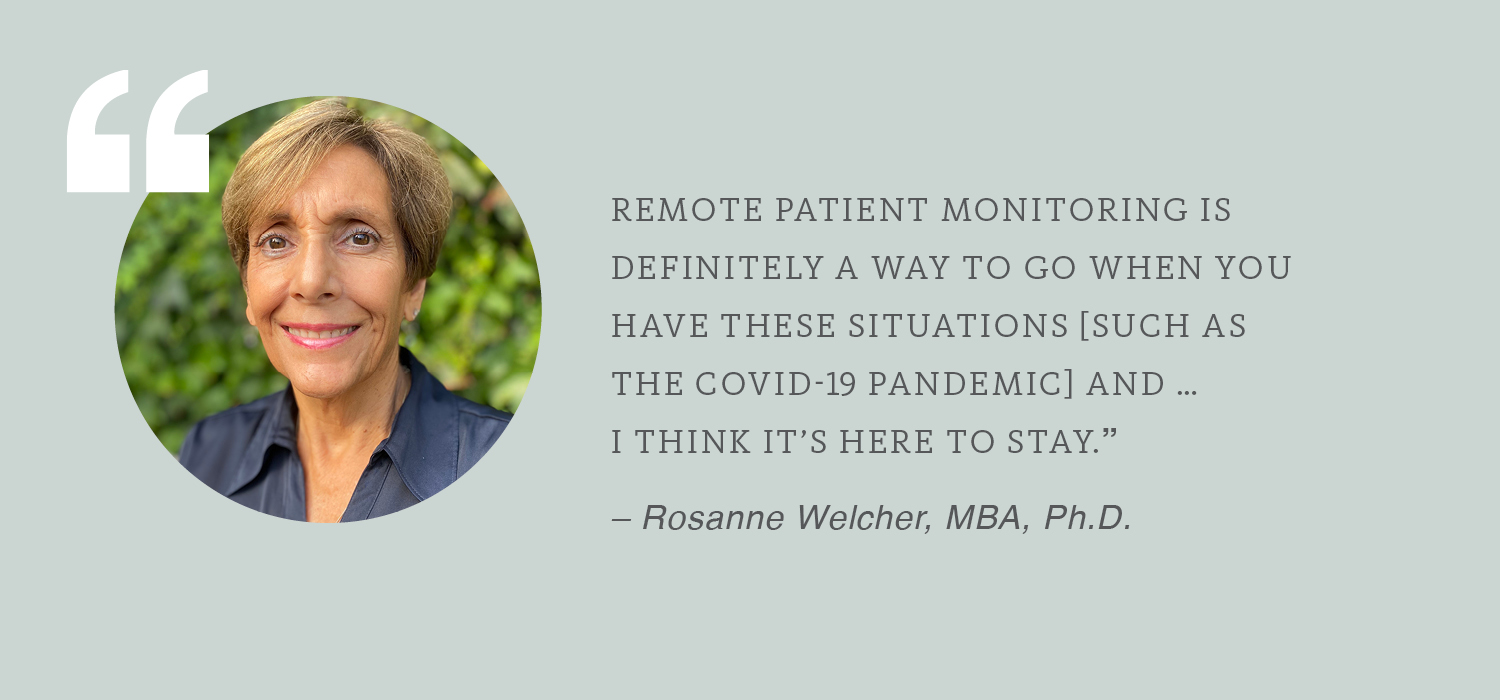
“Remote patient monitoring is definitely a way to go when you have these situations and … I think it’s here to stay,” said Welcher.
According to a recent study published in the American Society of Clinical Oncology Journal, patients who were not monitored were significantly more likely to experience hospitalization than those receiving remote patient monitoring.
In May, the team announced a license agreement with Mayo Clinic and is currently working with Dr. Tufia Haddad, a breast oncologist and medical director of Mayo Clinic’s Center for Digital Health, who serves as an advisor to the startup, according to the team’s recent press release. The study aims to further develop and refine the technology into a valuable product and increase its potential for adoption in the marketplace.
Additionally, NXgenPort has mapped out their regulatory strategy toward an FDA 510(k) clearance and is modeling it after other types of devices in the field that already have clearance. After working in a highly regulated industry, with a regulatory affairs background and 16 patents under her belt, Welcher considers NXgenPort as a medical device that she aims to seek out not only FDA clearance, but also worldwide guidelines on safety and biocompatibility.
“By understanding and following guidelines on medical devices early in development, we have created the foundation to continue the right path for medical device registration and commercialization,” said Welcher.

A REMOTE HOME AT THE COVE @ UCI
To further advance their goals, NXgenPort was eager to join UCI Beall Applied Innovation’s Wayfinder program to gain access to the state-of-the-art facilities, comingle with startups as well as network with the Innovation Advisors.
“We thought the Innovation Advisors was a good cadre of people that would help us … there’s marketing, regulatory, improving our pitch deck, talking to investors, getting connections to angel investor groups and the potential to move into a lab space,” said Skinner.
The team has applied to the University Lab Partners, Orange County’s wet lab incubator located within the same building as Applied Innovation. They also were recently accepted into mHUB, an independent tech and manufacturing six-month accelerator as part of a cohort that focuses on disruptive medical devices.
Additionally, NXgenPort hopes to tap into the Henry Samueli School of Engineering, by participating in the BioENGINE program utilizing student engineers to help grow the business and devote additional resources to the technology’s development.
“For people reading about entrepreneurship and doing startups, there’s a lot of buzz about how much money you can make and how bright and shiny it is, but the reality is 90 % of companies fail, and the work is hard. So, I think that needs to be assessed, and the risk and the sacrifice is real,” said Skinner.
But the team is not discouraged — they have applied for a Small Business Innovation Research grant and they are looking for a lead investor for their seed funding round.
“It’s hard. You have to be committed to resiliency, diligence and hard work. It’s not for the faint of heart,” said Skinner.
Learn more about NXgenPort.
All Art & Graphics: Julie Kennedy
NXgenPort headshots courtesy of NXgenPort